
What Is a Custom Plush Toy?
A practical, buyer-focused guide to what “custom” actually means when sourcing plush toys for your brand — and what separates a real custom process from a relabeled stock design.
Updated August 2026 · B2B sourcing guide
A custom plush toy is a stuffed toy built from a design, pattern, and materials chosen specifically for one buyer — not selected from an existing catalog.
Direct answer: If a factory is building your product from your own artwork, brand-specific pattern, or exclusive color and material spec, it’s custom. If they’re relabeling an existing mold or design with your logo, it isn’t — no matter what the listing calls it.
What Is a Custom Plush Toy? — TL;DR: “Custom” spans a spectrum from lightly modified stock patterns to fully original character sculpts, and the real dividing line for B2B buyers is design ownership, MOQ, and whether sampling happens before production.
Scope: This article covers the definition, materials, and buyer-side considerations for sourcing custom plush toys for business use (branding, retail, gifting, licensing). It does not cover DIY/hobbyist plush-making or specific safety certification procedures — see our dedicated compliance guides for that.
What This Guide Covers
This is the pillar guide for our custom plush toy content series. It gives you the complete picture in one place, and links out to deeper, dedicated guides on each sub-topic as they’re published:
• The physical, commercial, and procurement definitions of “custom” — covered in full below
• Production models (OEM vs ODM vs full custom) — covered below, deep dive coming in a dedicated guide
• Materials & construction (fabric, filling, stitching, accessories) — covered below, see dedicated material guides
• Toy safety & compliance basics — covered below, see our full compliance guide
• Where businesses actually use custom plush toys — covered below, with links to use-case-specific guides
• What to confirm before sampling — our buyer checklist
What Is a Custom Plush Toy? (The Physical Definition)
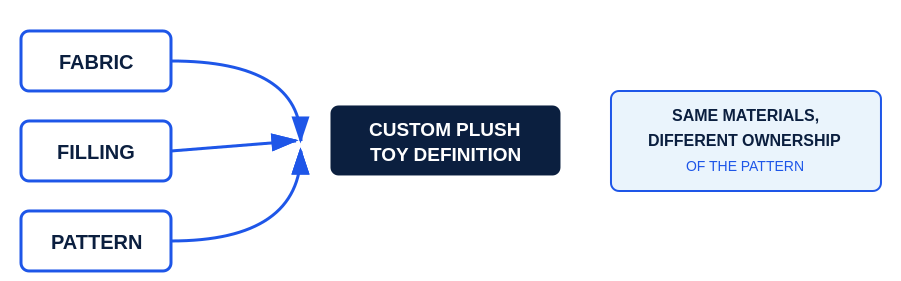
At the most basic level, a custom plush toy is a soft, stuffed toy constructed from a pile fabric outer shell (plush, minky, or a similar textile) and an interior filling, built to a design that belongs to one buyer rather than pulled from a factory’s existing stock catalog. The shape, proportions, and construction are determined by a pattern — the technical template that translates flat artwork into a three-dimensional stitched object.
What makes it “custom” isn’t the material itself — stock and custom plush toys often use the same fabric and filling types. It’s that the pattern, silhouette, and often the embroidery or accessory placement are developed specifically for your brand and aren’t sold to other buyers under a different label.
The “Custom” 3-Layer Definition Model
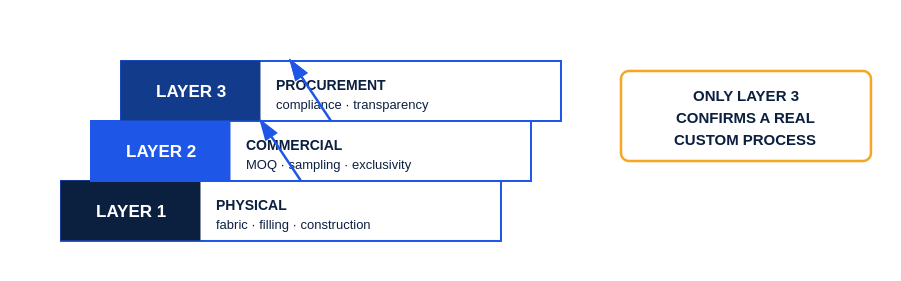
Most articles on this topic treat “custom” as a single yes/no category. In practice, B2B buyers benefit from breaking it into three layers, because each layer has different cost, timeline, and risk implications:
1. Physical definition: the fabric, filling, and stitched construction that make up the toy itself.
2. Commercial definition: the line between custom and stock — measured in MOQ, sampling requirements, and whether the design is exclusive to you.
3. Procurement definition: the specific things a B2B buyer needs to confirm before committing — safety compliance, sampling process, and material sourcing transparency.
“Our workshop motto is simple: even a small order deserves a real custom process. That’s why we started this factory in the first place — so people with a genuine custom idea wouldn’t be turned away just because their order size was small.”
Custom Plush Toy vs Stock Plush Toy: Where’s the Real Line?
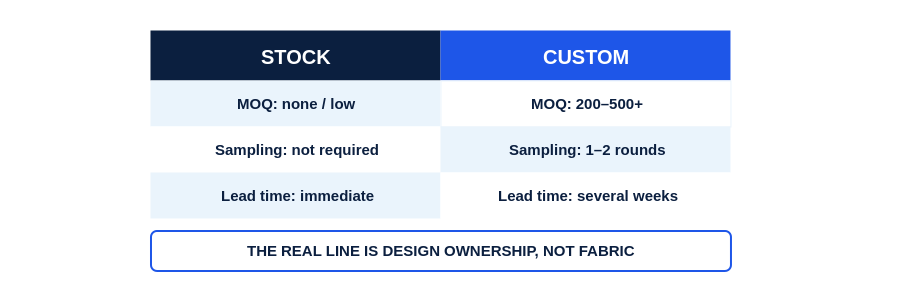
The table below lays out the practical differences buyers should check before assuming a quote is for a genuinely custom product:
Factor | Stock Plush Toy | Custom Plush Toy |
Design ownership | Shared/generic design, sold to multiple buyers | Exclusive to your brand, original sculpt or modified pattern |
MOQ | Often none, or very low | Typically 200–500+ units depending on complexity |
Sampling | Not required, ships from existing stock | 1–2 sampling rounds before mass production |
Unit price | Lower, spread across mass production | Higher, reflects tooling and pattern development cost |
Lead time | Immediate/short (in-stock) | Several weeks, sampling + production + shipping |
For a closer look at what a fully custom process looks like end to end, see our Production Process → and Ordering Process → pages.
What Materials and Construction Define a Custom Plush Toy?
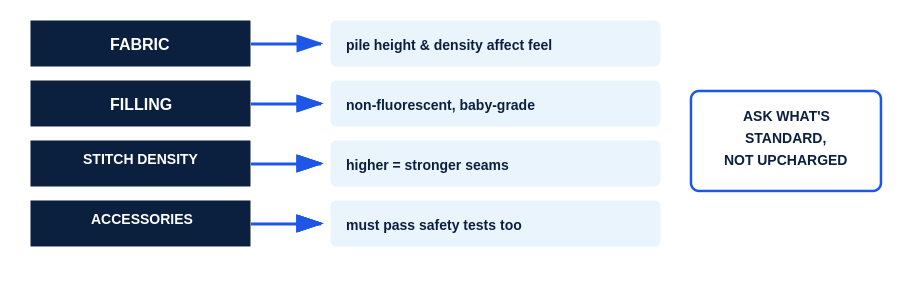
Custom doesn’t change the raw materials available — it changes how precisely they’re specified for your product. Buyers should be able to ask about, and get clear answers on, each of the following:
Component | What It Means | Buyer Consideration |
Outer fabric (plush/minky/PV) | The pile textile forming the toy’s surface texture | Pile height and density affect hand-feel and durability |
Filling | Interior stuffing (PP cotton, PP pellets, memory foam) | Confirm non-fluorescent, baby-grade material for child-facing products |
Stitch density | Stitches per centimeter along seams | Higher density generally means better seam strength and durability |
Accessories | Eyes, noses, BB squeakers, hangtags, embroidery | Confirm each accessory independently meets safety standards |
Every plush toy in a properly run custom process should hold to a defined stitch density along seams and use non-fluorescent, baby-grade filling material as a baseline — not an upcharge option. For a full breakdown of available fabric options and accessories (noses, squeakers, hangtags, and more), see our fabric options and accessories reference pages.
OEM vs ODM vs Full Custom: Which Production Model Are You Actually Buying?
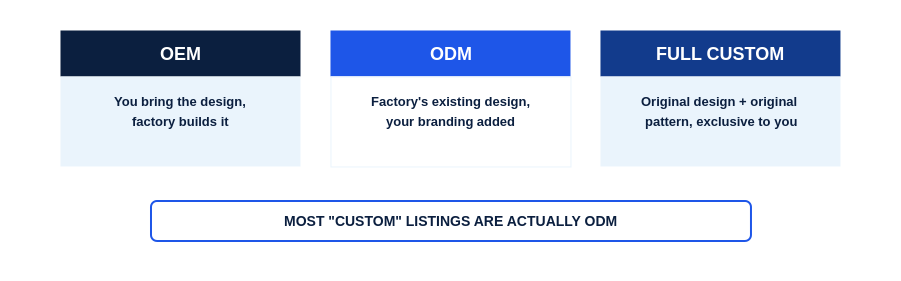
“Custom” gets used loosely across three distinct production models, and knowing which one you’re being quoted changes what you should expect on price, MOQ, and IP ownership:
OEM (Original Equipment Manufacturer): you supply the design; the factory manufactures it to your spec. This is the model most B2B buyers mean when they say “custom.”
ODM (Original Design Manufacturer): the factory already has a design or pattern base, and you add your branding, colors, or minor modifications on top of it. Often faster and cheaper, but less exclusive.
Full custom: an original character sculpt, developed from scratch specifically for you, with a pattern that belongs only to your brand. Highest cost and MOQ, highest exclusivity.
A deeper breakdown of how each model affects pricing and timelines will be covered in a dedicated OEM vs ODM guide within this content series.
Toy Safety & Compliance at a Glance
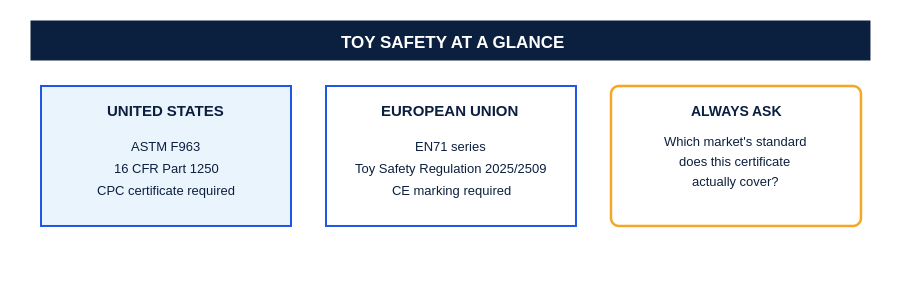
This is a summary orientation, not a compliance guide — safety requirements are jurisdiction-specific and detailed enough to warrant their own dedicated article in this series. At a minimum, B2B buyers should confirm which market’s standard a supplier’s certificate actually covers before assuming it applies to their target market.
See our full Toy Safety Compliance → page for details specific to our production process.
What Do Businesses Use Custom Plush Toys For?
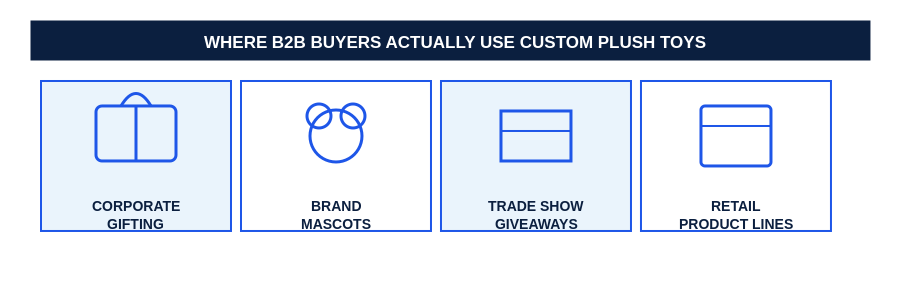
Custom plush toys show up across a range of B2B use cases: branded mascots for corporate identity, promotional giveaways at trade shows, retail product lines built around an original character, corporate gifting programs, and licensed merchandise for IP holders. The common thread across all of these is that the toy needs to represent something specific — a logo, a character, a brand feeling — that a stock design can’t deliver. Each of these use cases has its own considerations worth a dedicated look in this guide series: corporate gifting programs, trade show and event giveaways, retail branding, and e-commerce/subscription-box sellers each come with different MOQ, timeline, and packaging priorities.
Product Formats You Can Customize
Beyond the standard plush toy shape, the same custom process applies to several other formats, each worth understanding on its own: plush keychains (small-format, low per-unit cost, popular for retail add-ons), backpack clips, plush pillows/cushion toys (dual-purpose comfort items), and mascot costumes (a related but distinct product from a plush toy, built for a person to wear rather than to be held). Dedicated guides on each of these formats are planned within this content series.
What Should B2B Buyers Confirm Before Sampling?
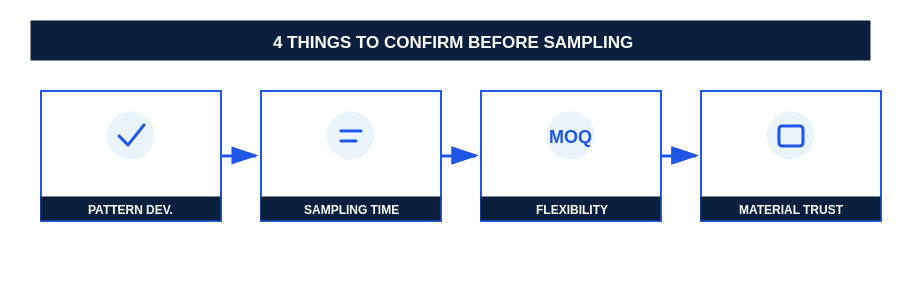
Before committing to a supplier, these are the questions that separate a factory that understands custom manufacturing from one that’s just executing a generic order:
1. Pattern development process. Ask whether your design will get a dedicated pattern, or whether it’s being mapped onto an existing base pattern with modifications. Both are legitimate, but the price and MOQ should reflect which one you’re getting.
2. Real sampling timeline. A factory that has its sampling process genuinely dialed in can turn around a revised sample in a few days, not weeks. Earlier this year, a new client named Mary confirmed an order of 1,000 units of a custom plush mascot and paid the sampling fee to get started — once the design was locked, the pattern team turned the revised sample around in just 2 days after her first round of feedback.
3. MOQ flexibility for simpler designs. Not every custom project needs a from-scratch pattern. Last week, a corporate client came to us after contacting seven or eight factories that all quoted a minimum order of 500 units or more — but she only needed 200 pieces for a company gift program. We reviewed the design, found it simple enough to adapt from an existing pattern base, and brought the order down to 200 units with a 3-day sampling cycle. When the shipment arrived, she told us the accuracy to her original design exceeded her expectations by roughly 15%.
Real client feedback echoes this same pattern — for example, one buyer who initially ordered 800 units later planned a larger second order based on the results, while another running a subscription box program ordered 2,000 units shipped vacuum-packed to cut logistics costs. See more in our customer testimonials.
4. Material transparency. Ask specifically what filling grade and stitch density the factory uses as standard, not as a paid upgrade — and whether they’re willing to state it in writing.
A common misconception among first-time buyers is that the lowest MOQ quote is automatically the better deal. In practice, MOQ reflects real fixed costs — pattern development, material minimums, and quality control setup — that don’t disappear just because a supplier quotes a smaller number. A supplier willing to go far below the economically viable MOQ for a complex design is often cutting corners somewhere the quote doesn’t show: lower-grade fabric, thinner filling density, or skipped inline inspection.
See how a properly run process handles this at every stage on our Quality Control Process → page.
Frequently Asked Questions
How much do custom plush toys cost? Unit price depends heavily on size and complexity. Simple, small designs (around 6 inches) with a basic pattern often start in the $3–4.5 per-unit range at 1,000+ MOQ; more complex designs above 15 inches with multiple panels can run $12–18+ per unit. These figures move with material choice, embroidery detail, and order volume.
What’s a typical MOQ for a custom plush toy? Simple standard shapes are often quoted around 200–500 units; complex original character designs with many pattern pieces typically start around 500–1,000 units. Some factories can go lower for buyers reusing an existing pattern base with modifications.
How long does custom plush toy manufacturing take? Sampling typically takes a few days to about two weeks depending on design complexity and revision rounds; mass production after sample approval commonly runs several weeks, plus shipping time.
Is a custom plush toy the same as a personalized plush toy? Not necessarily — “personalized” sometimes just means adding a name or logo to an existing stock design, while “custom” implies the pattern and construction itself were developed for your brand. Confirm which one a supplier is actually quoting.
Related Reading in This Guide Series
This article is the pillar guide for our custom plush toy content series. As each of the following is published, links will go live here — bookmark this page as the central hub for the full series.
Related Definitions
• What Is a Plush Mascot? • What Is a Promotional Plush Toy? • What Is a Private Label Plush Toy? • What Is a Licensed Plush Toy? • What Is a Weighted Plush Toy? • What Is a Sensory Plush Toy?
Production & Materials
• OEM Plush Toy Manufacturing Explained • ODM Plush Toy Production Explained • Plush Toy Sampling Explained: From Sketch to Prototype • Minky Fabric Explained • PP Cotton Filling Explained • Embroidery vs Screen Printing (for Plush Toys)
Types & Classification
• Types of Custom Plush Toys You Can Order • Types of Plush Fabric Used in Soft Toy Manufacturing • Types of Plush Toy Filling Materials • Types of Plush Toy Safety Eyes and Noses • Types of Plush Toy Stitching Techniques • Types of Custom Plush Packaging Options • Types of Plush Toy Certifications You Should Know
Use Cases
• Custom Plush Toys for Corporate Gifts • Custom Plush Toys for Trade Shows and Events • Custom Plush Toys for Retail Branding • Custom Plush Toys for E-commerce Sellers • Custom Plush Keychains: What They’re Used For • Custom Plush Backpack Clips: What They’re Used For
Product Formats
• What Is a Plush Pillow/Cushion Toy? • What Is a Mascot Costume? (vs Plush Toy) • What Is a Plush Toy Prototype (Sculpt)? • What Is a Tech Pack in Plush Toy Manufacturing?
Terminology Buyers Should Know
Industry/Supplier Term | What It Means for a Buyer |
MOQ (Minimum Order Quantity) | The smallest quantity a factory will produce per design, driven by fixed setup costs |
OEM | Factory manufactures your original design; you own the IP |
Sampling / Proofing | The pre-production sample round used to approve shape, color, and construction before mass production |
Pattern (Tech Pack) | The technical sewing template that determines how a 2D design becomes a 3D shape |
FOB / EXW | Shipping terms determining where cost and responsibility transfer from factory to buyer |
A Note on Scope
This article is intended as a general buyer’s orientation to what “custom” means in plush toy manufacturing. It does not constitute regulatory certification, a legal compliance guarantee, or a substitute for reviewing a specific supplier’s own test reports and certifications. Toy safety requirements (such as ASTM F963 in the U.S. or the EU Toy Safety Regulation) are complex and jurisdiction-specific — buyers should confirm current requirements directly with a testing lab or regulatory counsel for their target market. See our own
References & Sources
1. U.S. Consumer Product Safety Commission — Toy Safety Business Guidance
2. European Commission — Toy Safety
3. Industry MOQ cost-structure analysis — Kinwin Toys MOQ Guide
Ready to Start Your Custom Plush Project?
Have a plush idea you’ve been sitting on? Let’s talk about what it would take to make it real.