
What Is a Private Label Plush Toy?
A plain-language guide to what makes a plush toy “private label,” how it differs from custom and OEM, and what to confirm before starting a project.
Updated August 2026 · Beginner’s glossary guide
A private label plush toy is manufactured by a factory but sold entirely under the buyer’s own brand — the factory’s identity never appears to the end customer.
Direct answer: If the label, packaging, and story on a plush toy are 100% the buyer’s brand, with no trace of who actually manufactured it, that’s private label — sometimes also searched as “private label toys” more broadly.
What Is a Private Label Plush Toy? — TL;DR: The defining trait isn’t the design or the production method — it’s that the manufacturer stays invisible and the buyer’s brand owns the entire customer-facing identity.
Scope: This article covers the definition and planning considerations for private label plush toys. For sourcing and production details, see our complete guide,
linked at What Is a Custom Plush Toy? →.
What Is a Private Label Plush Toy, Exactly?
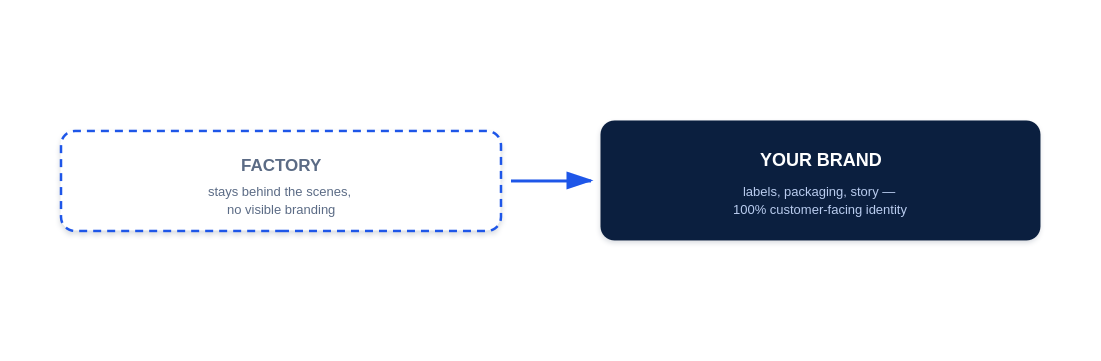
The defining feature of private label isn’t the toy’s design or how it’s produced — it’s what happens to the factory’s identity afterward. In a private label arrangement, the manufacturer builds the product but stays entirely behind the scenes: the labels, hangtags, packaging, and brand story that reach the customer are 100% the buyer’s own. A customer holding the finished toy would have no way of knowing which factory made it.
Private Label vs Custom vs OEM: What’s the Difference?
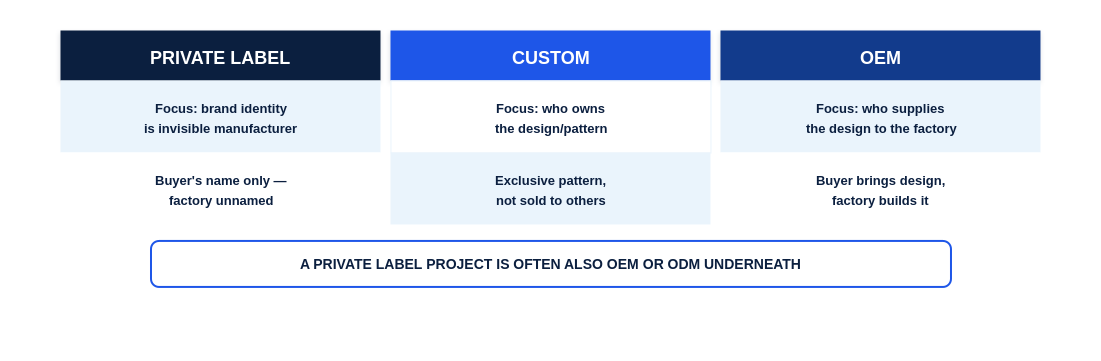
These three terms overlap constantly because a single project is often all three at once. The distinction is about what each word emphasizes:
A private label project is defined by brand invisibility — the manufacturer’s name appears nowhere. A custom project (see our complete guide →) is defined by design ownership — the pattern is exclusive to one buyer. An OEM project is defined by who supplies the design — the buyer brings it, the factory builds it. In practice, a private label plush toy is very often OEM or ODM underneath, with private label describing the branding layer on top.
What’s Included in a Private Label Program?
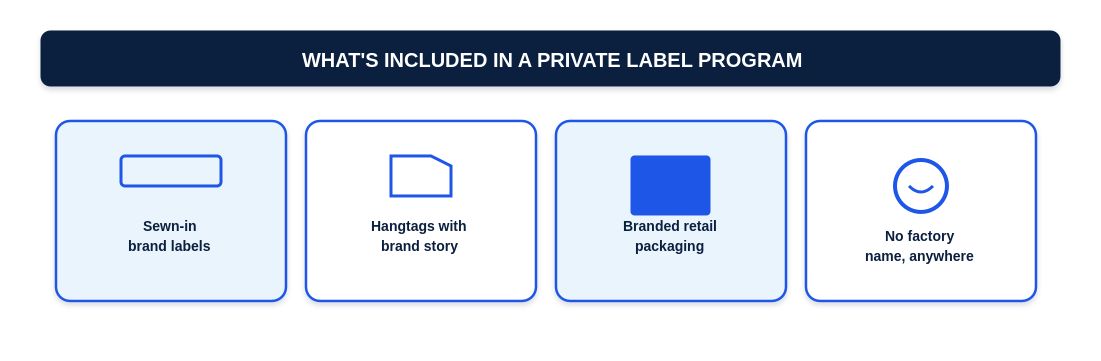
A complete private label setup typically covers four elements: sewn-in brand labels (fabric labels stitched into the toy itself, carrying brand and material information), hangtags with brand story (removable cards used for retail presentation and storytelling), branded retail packaging (boxes, polybags, or blind-box formats matched to the sales channel), and — critically — no factory name appearing anywhere on the product, packaging, or documentation the end customer sees.
Who Is Private Label Best For?
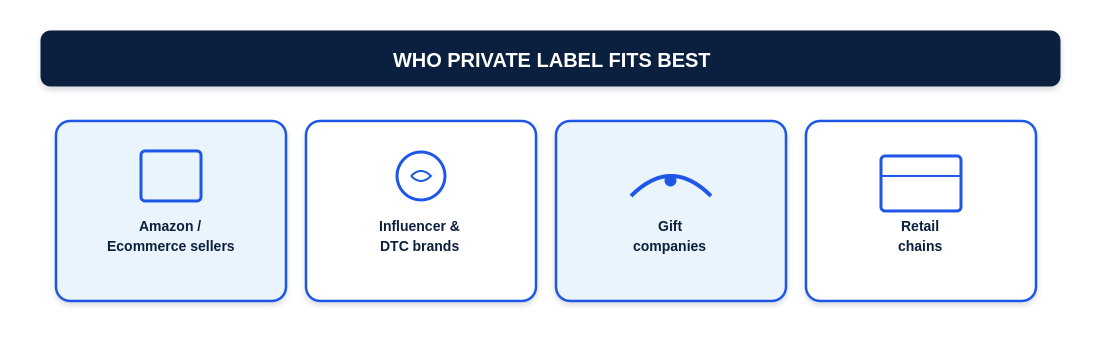
Private label fits Amazon and ecommerce sellers building their own product catalog, influencer and DTC brands turning a personal following into physical products, gift companies that need collections matching a specific brand style, and retail chains that want exclusive product lines their competitors can’t simply reorder from the same factory.
A Real Example
One recent project we took on was for Milky Tomato, a U.S. influencer brand whose founder has millions of followers across TikTok and Instagram. We met at a trade show, and the conversation moved quickly from introduction to sampling. The brand wanted an original shark-themed plush series, using 3D cotton shaping combined with appliqué embroidery for a distinctive, polished look. The founder has been documenting the design and sampling process for her own audience as it happens, and we’re still refining details on the current sample round. It’s a good illustration of how private label relationships actually start — not with a massive opening order, but with a founder who already has an audience and needs a manufacturing partner able to turn her concept into something that looks and feels premium enough to represent the brand, with our factory’s name never entering the picture.
What Should Buyers Confirm Before Starting?
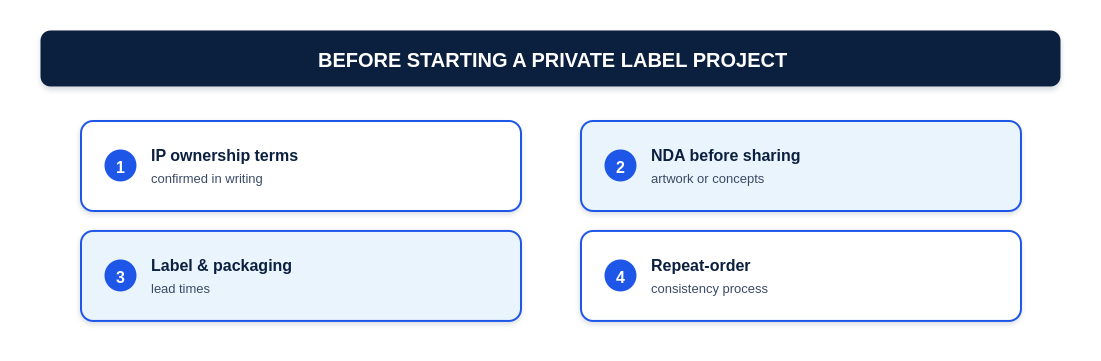
IP ownership terms confirmed in writing: make sure the agreement is explicit about who owns the character design and pattern long-term.
NDA before sharing artwork or concepts: especially important for influencer and IP-driven brands where the design itself is the core asset.
Label and packaging lead times: woven labels and printed packaging often carry their own minimum order quantities and separate production timelines from the toy itself.
Repeat-order consistency process: ask how the factory reproduces the exact same look and feel on your second and third orders, not just the first sample.
Frequently Asked Questions
Is private label the same as white label? The terms are often used interchangeably; “white label” sometimes implies a more generic base product that multiple brands can apply their own labeling to, while private label often implies a more brand-specific development process.
Do I need an NDA for a private label project? It’s strongly recommended, particularly if your design, character, or concept is central to your brand’s value — an NDA protects that before you share any artwork.
Can a private label plush toy also be custom? Yes — most private label projects are custom or semi-custom underneath; private label describes the branding layer, not the design process itself.
What’s the minimum order for a private label project? This varies by design complexity and factory; ask specifically, since label and packaging components often carry their own separate minimums beyond the toy’s base MOQ.
Terminology Buyers Should Know
Term | What It Means |
Private label | Products manufactured by a factory but sold entirely under the buyer’s brand identity |
White label | Similar to private label; often used interchangeably, sometimes implies a more generic base product |
OEM | Buyer supplies the design; factory manufactures it |
NDA | Non-disclosure agreement protecting a buyer’s designs before a project begins |
A Note on Scope
This article is a plain-language introduction to private label plush toy planning. It does not cover detailed sourcing, MOQ, or compliance procedures — see our complete buyer’s guide and compliance page for that.
Want to Launch Your Own Private Label Plush Line?
Whether you’re an influencer brand, an ecommerce seller, or a gift company, our team can walk you through labeling, packaging, and NDA terms before sampling begins.